
When a part shows up at the next operation scratched, dented, or out of tolerance, it's tempting to write it off as bad luck on the road. It almost never is. Transit damage is a packaging-design problem. Parts don't get hurt because trucks are rough — they get hurt because the packaging let the part move, rub, take load, or sit exposed to something it couldn't survive. The good news is that a small number of root causes account for most of the damage, and every one of them can be engineered out before the first part ships.
This is a look at where transit damage actually comes from, and the specific design decisions — in the rack, the dunnage, and the finish — that stop it. If you're fighting scrap, rework, or sort costs on an inbound lane, this is the part of the problem you have the most control over.
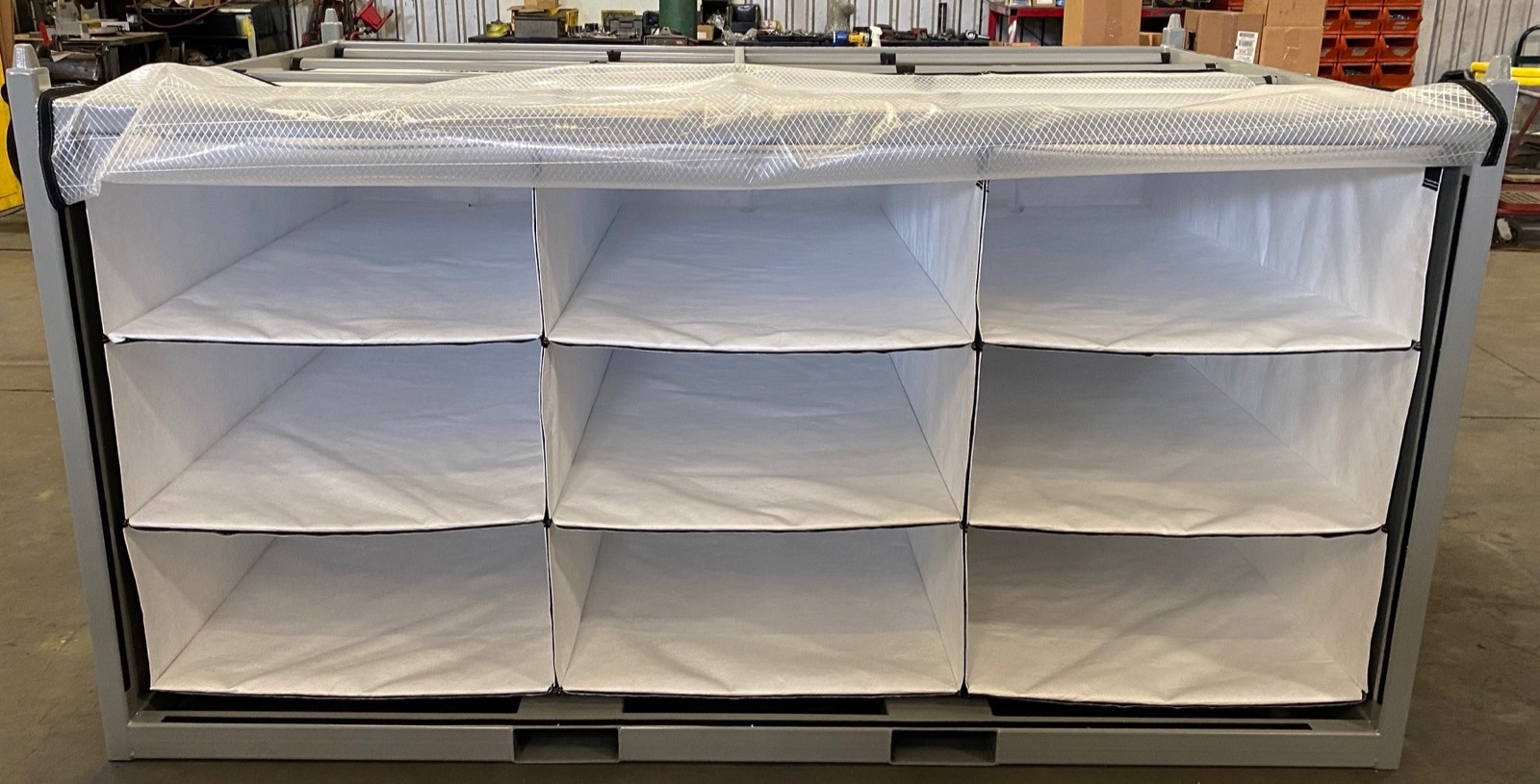
Where transit damage actually comes from
Damage on a part almost always traces back to one of five mechanisms. Naming the mechanism is what lets you pick the right fix instead of throwing generic cushioning at the problem.
- Movement and shifting. A part that isn't held in a defined position slides, tips, or walks during acceleration, braking, and cornering. Loose parts contact each other and the container, and a part that moves is a part that will eventually move into something hard.
- Vibration and abrasion. Even a part that stays put can be ruined by hours of road vibration if it rests against steel, another part, or a hard surface. Micro-movement over a long lane polishes finishes, wears through coatings, and frets machined faces.
- Stack and compression load. When racks or containers stack, the load travels down through the stack. If that load path runs through the parts instead of around them, the bottom layers get crushed, bent, or deformed.
- Impact and handling. Fork trucks, drops onto the dock, and hard sets during load and unload put shock into the container. Poorly supported parts transmit that shock straight into edges and thin sections.
- Environmental exposure. Moisture drives corrosion and flash rust on bare or machined surfaces. Static-sensitive parts pick up ESD damage. Temperature swings and condensation inside a wrapped load do their own quiet harm.
If you fix only one thing, fix movement. A part locked in a dedicated position can't rub, can't tip into its neighbor, and can't take a load path it wasn't meant to carry — and nearly every other failure mode gets easier once the part physically cannot travel inside its packaging. That's the whole idea behind an engineered returnable steel rack: not a generic bin you drop parts into, but a structure built around the specific geometry of your part.
The principleHold each part in a dedicated, protected position for the whole trip.
Each damage mechanism maps to a specific design response. Here's the short version before we walk through each fix.
| Damage cause | What it looks like | Design fix |
|---|---|---|
| Movement & shifting | Random scratches, tipped or nested parts, edge dings | Dedicated part pockets, nests, and fixturing that locate each part |
| Vibration & abrasion | Polished spots, worn coating, fretting on faces | Foam-lined contact points so the part never touches steel or another part |
| Stack & compression load | Crushed lower layers, bent flanges, deformed sections | Stacking legs and load paths that carry weight around the parts |
| Impact & handling | Dents, cracked edges, damage near fork pockets | Cushioned dunnage, defined fork access, robust rack structure |
| Environmental (moisture / ESD) | Flash rust, corrosion, static-damaged electronics | Right material and finish, dry packing, ESD-safe or non-abrasive liners |
Fix 1: dedicated part pockets and fixturing
The single most effective move is to give every part its own location. Nests, cradles, pins, and slots designed to the part's actual geometry mean a part goes in one way, sits in one place, and can't shift in transit. Fixturing also protects the surfaces you care about by controlling exactly where the part is supported — you carry the load on robust, non-critical features and keep hard contact away from finished or machined faces. Designed well, pockets also speed up load and unload and make it obvious when a part is missing or seated wrong.
Fix 2: custom foam inserts and dunnage
Where the part does touch the rack, that interface should be soft. Custom foam inserts cushion road shock and, just as importantly, kill the abrasion that comes from hours of vibration against a hard surface. For heavier parts and structural separation, engineered dunnage — bars, uprights, trays, and separators sized to the part — keeps parts apart and transfers handling shock into the rack instead of into the part. The rule of thumb is simple: on any finish-critical or machined surface, steel should never touch the part.
Fix 3: secure stacking and load transfer
Returnable racks earn their keep by stacking, but stacking is also where compression damage happens. The fix is a defined load path: stacking legs, feet, and frame members that carry the weight of the racks above down through the structure and around the parts, never through them. When the load path is designed in, the part in the bottom layer sees the same protection as the part on top. If you're weighing stacking against nesting or collapsing designs, the rack spec guide covers the trade-offs.
Fix 4: the right material and finish
The rack itself shouldn't become a damage source over hundreds of trips. A powder-coated or painted steel structure resists the wear and rust that would otherwise turn a rack into a rough, abrasive, contaminating surface. Finish also matters for the part's environment: a durable coating keeps the rack clean and non-marring, and the right base material and finish help manage corrosion on long or humid lanes. For static-sensitive parts, contact surfaces should be specified as ESD-safe and non-abrasive. Getting material and finish right is what lets a returnable asset protect parts for years rather than a few cycles.
Fix 5: line-side presentation
Protection doesn't end at the dock. How a part presents at the line affects damage too — parts that are easy to reach, correctly oriented, and at the right height get handled gently, while parts that operators have to fight, dig for, or reorient get dropped and scraped. Designing presentation and ergonomics into the rack reduces the handling damage that happens in the last three feet, after the part survived the whole lane.
What to specify to protect a part
When you brief a packaging supplier, this is the short list that separates a rack that protects parts from a bin that just holds them:
- Dedicated pocket, nest, or fixture for each part — one defined position, one orientation
- Foam or soft liner on every surface that touches a finish-critical or machined face
- Defined load path with stacking legs so weight bypasses the parts
- Cushioned dunnage sized to absorb handling and fork-truck shock
- Material and finish rated for the lane's moisture, wear, and cycle count
- ESD-safe, non-abrasive contact surfaces where the part requires it
- Fork access, height, and orientation designed for safe, low-effort line-side handling
What we see on the floor
Most damage complaints we're handed come down to parts that could move. When Southern Perfection designs a returnable packaging program, we start from the part geometry and the failure mode, then engineer pockets, fixturing, dunnage, and foam so the part is held and cushioned for the entire trip. That work happens in-house — SolidWorks design, laser cutting, forming, welding, and powder coat and paint under one roof in Byron, GA — so the rack that gets built is the rack that was engineered, and CMM inspection confirms the fixturing lands where the drawing says. Because it's returnable, that protection is paid back trip after trip; the cost-per-trip math is usually what makes the case.
Send us the part that's getting damaged and the lane it runs — we'll design the fixturing to protect it.
Packaging can't fix everything
Honest expectations matter. Good packaging design engineers out the damage that comes from movement, abrasion, compression, and normal handling. It can't fully compensate for a part loaded outside its lane, racks stacked beyond their rated capacity, or genuinely abusive handling that no cushioning was scoped to survive. If parts are still getting hurt after the fixturing is right, the answer is usually process — load counts, stacking discipline, or the lane itself — not more foam. The best packaging program pairs a well-designed rack with realistic limits that everyone on the lane understands and respects.
Frequently asked questions
What causes most transit damage to parts?
Movement. Parts that aren't held in a dedicated position shift, tip, and rub during transport, which leads to scratches, dents, and abrasion. Holding each part in a fixed, cushioned position eliminates the largest share of transit damage.
Do I need custom foam, or is generic dunnage enough?
It depends on the part. Generic dunnage separates and supports parts, but finish-critical or machined surfaces usually need custom foam shaped to the part so there is no hard contact and no abrasion over a long lane. Most programs use both — dunnage for structure and separation, foam where the surface matters.
Can a returnable rack protect parts while still stacking to save freight?
Yes, when the load path is engineered. Stacking legs and frame members carry the weight of the racks above down through the structure and around the parts, so the bottom layers are protected as well as the top. That's a design decision made up front, not an afterthought.
How do I protect parts from corrosion or ESD in transit?
Specify material and finish for the lane. A durable coating and the right base material help manage moisture and rust, and static-sensitive parts should sit on ESD-safe, non-abrasive contact surfaces. Dry packing and controlling condensation inside wrapped loads also help.
What should I send a supplier to get the fixturing right?
The part — a sample or a print — and the lane it runs, including how it stacks and how it's handled. From the geometry and the failure mode, the packaging can be designed around the part instead of forcing the part into a generic container.