
Home · Capabilities · CNC Forming & Bending

CNC press-brake forming & bending.

Press-brake forming to 230 tons, CNC tube bending, and plate rolling — accurate, repeatable forming that shapes the steel for your racks, frames, and assemblies.

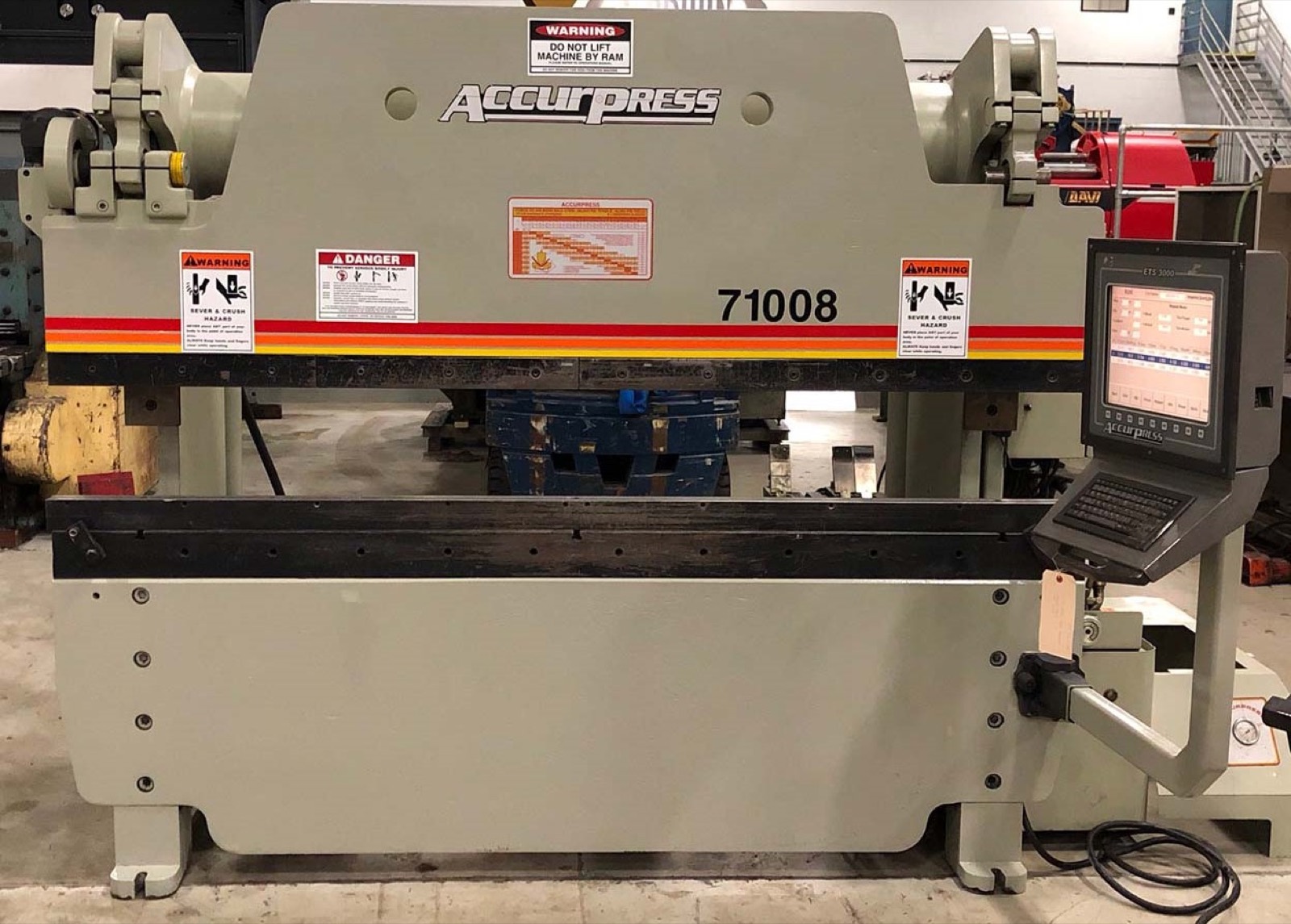
Accurpress CNC press brake for metal forming at Southern Perfection Fabrication

Form

What is metal forming?

Metal forming shapes flat or tubular metal into finished geometry through bending, rolling, and press-brake forming — without removing material. It is how a flat blank becomes a bracket, a channel, or a rack member.

SPF forms with CNC press brakes to 230 tons, CNC tube bending, and plate rolling — accurate, repeatable forming that shapes the steel for your racks, frames, and assemblies.

Formed parts feed straight into welding and finishing in the same building, built to your print.

CNC Forming & Bending

Under one roof in Byron, GA.

Press Brake to 230 Tons

Heavy CNC press-brake forming for precise, repeatable bends.

CNC Tube Bending

Tube and pipe bending to your radius and spec.

Plate Rolling

Rolling for cradles, saddles, and cylindrical shapes.

To Print

Formed to your drawing and validated for fit-up.

Press Brake

CNC press-brake forming to 230 tons.

Our CNC press-brake forming line bends heavy sheet and plate with back-gauged repeatability, and bending to 230 tons handles the thick, high-tonnage parts many shops send out. Whether a job calls for air bending for flexibility, bottoming for consistent angles, or coining for the tightest bend radius, we plan the tooling and bend sequence to match your print.

Because press-brake forming feeds straight into welding and finishing in the same 100,000 sq ft plant, formed parts move into custom manufacturing without leaving the building — one roof, one point of accountability, from flat blank to finished assembly.

Bending

Sheet, plate & tube bending.

SPF bends sheet, plate, and tube to your geometry — hems, offsets, channels, angles, and multi-bend brackets on the press brake, plus CNC tube and pipe bending and plate rolling for cradles, saddles, and cylindrical shapes. Bending to 230 tons means heavy-gauge plate and structural profiles form to spec in-house.

Formed parts commonly pair with cut blanks and weldments; see our sheet metal fabrication for the full cut-form-weld path that turns a drawing into a finished part.

Tolerances

Bend tolerances & design.

Accurate forming starts before the brake. We work bend allowance, bend radius, K-factor, and tonnage into the plan up front so bends land where the print says, and CMM inspection verifies critical features to tolerances as tight as ±0.005". That means formed parts fit at assembly the first time, with no rework chasing spring-back.

Send a drawing and our in-house SolidWorks team will flag any forming or design-for-manufacturing concerns — bend radii, tooling access, and grain direction — before a single part is bent.

FAQ

Forming & bending — answered.

What is press brake forming?

Press brake forming bends sheet and plate to precise angles using a punch and die — our CNC press brakes go to 230 tons for heavy, repeatable bends.

How thick or large can you form?

With press-brake capacity to 230 tons plus tube bending and plate rolling, we handle heavy-gauge and large formed parts most shops send out.

Do you offer tube bending and plate rolling?

Yes — CNC tube and pipe bending and plate rolling for cradles, saddles, and cylindrical shapes, all to your spec.

What bend tolerances can you hold?

CNC back-gauging and CMM inspection let us hold tight bend tolerances down to ±0.005" on critical features. We account for bend allowance, bend radius, and K-factor up front so formed parts fit at assembly the first time.

What shapes and features can you form?

Hems, offsets, channels, angles, boxes, and multi-bend brackets in sheet and plate, plus rolled and bent tube. If your print calls for a specific bend radius or tonnage, we plan the tooling and bend sequence to match.

Have a part to quote?

Send a drawing — we'll come back with a real price and lead time.

Start an RFQ →