
Ask a fabricator whether your part should be sheet metal or plate and the honest first answer is "how thick is it?" Thickness is where the decision starts, but not where it ends. The moment a part crosses from sheet into plate, almost everything about how it gets made shifts: the machine that cuts it, the tonnage to bend it, how much it moves when you weld it, and what it costs. Two parts that look identical on a drawing can take completely different paths through the shop depending on which side of that line they fall.
This guide walks through where the transition sits, then through the practical consequences — cutting, forming, welding, strength, and cost — so you can make the call before the RFQ goes out. Most of it is general convention rather than hard rules, and a good steel fabrication shop will flex on the edges when the part calls for it.
Where sheet ends and plate begins
No law defines the boundary, but the industry leans on a rough convention: material up to about 3/16" is usually called sheet, and material at 1/4" and above is usually called plate. The band between the two is the fuzzy zone where either term gets used, and where the honest answer depends on the shop and the process rather than a spec.
Sheet is typically described by gauge number (lower gauge = thicker); plate is called out in fractional or decimal inches. A 12-gauge part with a few bends is firmly sheet-metal territory. A 1/2" base with holes and a weld-prep bevel is plate. The in-between parts are where a conversation with your fabricator pays off.
How thickness changes cutting
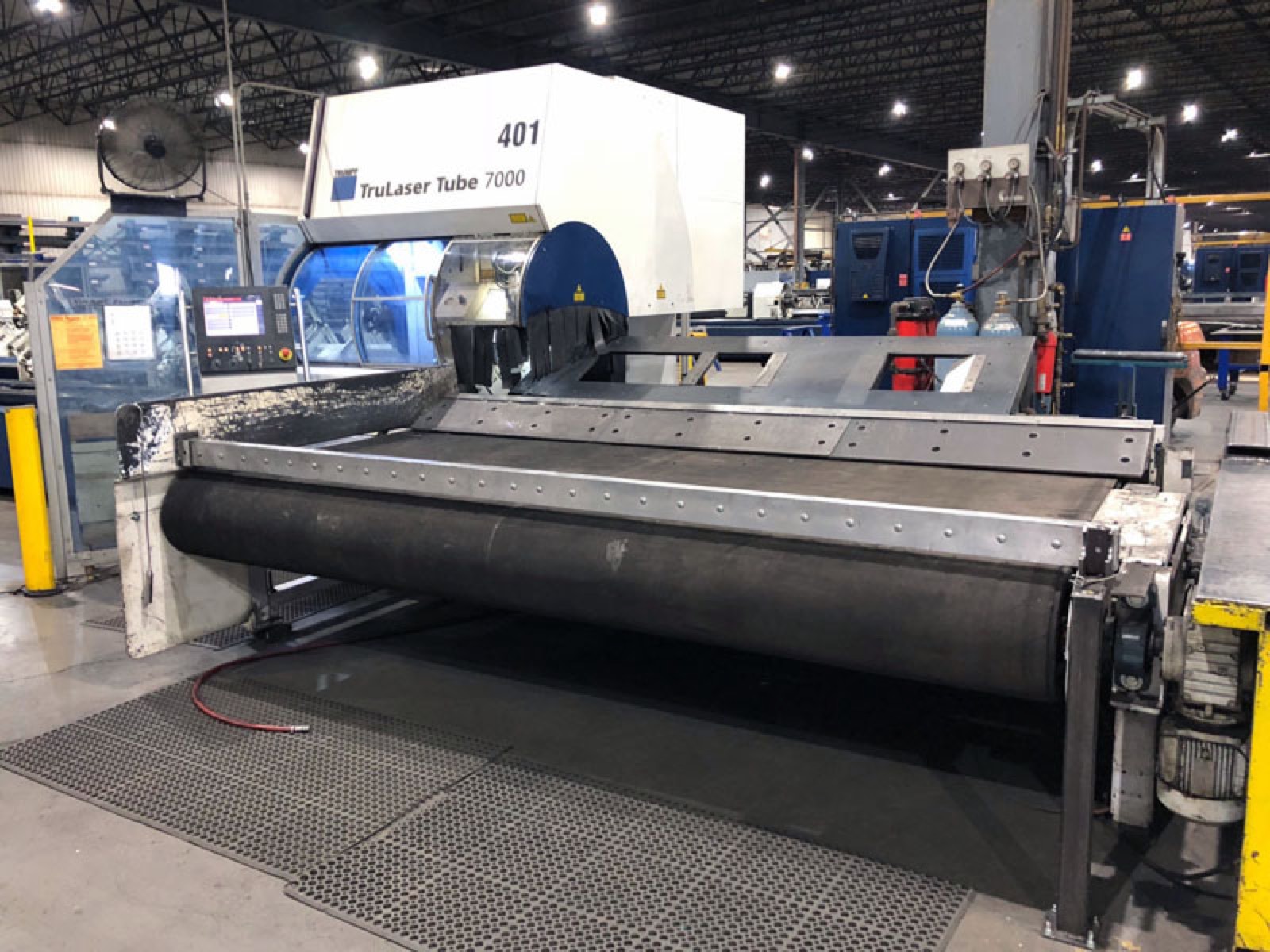
Cutting is where the split shows up first on the floor. Fiber laser cutting is the workhorse for sheet and the thinner end of plate: clean, square, repeatable edges with tight kerf and little secondary cleanup, and a modern large-format fiber laser handles a genuinely wide thickness range. That is why so many sheet-metal parts go straight from laser to press brake with nothing in between.
As plate gets thicker, the physics shift. Heavier plate moves to plasma cutting, and beyond that to processes built for mass — oxy-fuel, sawing, or machining for the heaviest sections. These cuts are entirely capable, but the edge is rougher and you may need to plan for cleanup if the feature has to be precise. The takeaway for a designer: a feature that is trivial to laser-cut in 10-gauge sheet may need a different process, and a different tolerance expectation, once it is specified in 3/4" plate.
How thickness changes forming
Bending is where thickness bites hardest. Press-brake tonnage climbs steeply with thickness — heavier material needs dramatically more force for the same bend, which is why plate work depends on high-capacity brakes. Press-brake forming that is effortless in sheet can push right up against a shop's tonnage ceiling in plate.
Minimum bend radius grows with thickness too. Thin sheet takes a tight, near-sharp bend; thick plate needs a generously larger inside radius to avoid cracking the outer fiber, and it springs back more, so tooling and bend allowance have to account for it. A design that assumes a crisp 90-degree corner gets more expensive — sometimes impossible — as material thickens. When plate is too thick or wide for a brake, rolling becomes the way to add curvature.
Welding and distortion
Thickness and welding pull in opposite directions on distortion. Thin sheet has little mass to absorb heat, so it warps, oil-cans, and burns through easily; it rewards low heat input, tacking, fixturing, and often robotic consistency to stay flat. Plate has the mass to shrug off heat locally, so burn-through is rarely the worry — but heavy welds build in residual stress that can pull a weldment out of tolerance over a long joint, and thick sections often need beveled edges and multiple passes for full penetration.
So "distortion risk" is not simply higher for one or the other; it changes character. On sheet you fight movement from heat; on plate you manage stress, joint prep, and pass sequence. Both are routine for an experienced weld shop, but they call for different planning, so it helps to flag the concern early rather than discover it at inspection.
Strength, weight, and stiffness
This is usually why a part gets specified in plate in the first place: load. Thicker material carries more, and bending stiffness rises far faster than thickness alone would suggest — doubling thickness increases it by roughly a factor of eight, so a modest bump in plate thickness buys a large jump in rigidity. If a bracket flexes, moving up in thickness is often the most direct fix.
The trade is weight and cost, which scale with thickness too. The smart move is matching material to the load path, not defaulting to "thicker is safer." Plenty of parts get strength from geometry — a flange, a bent lip, a gusset, a formed channel — rather than raw thickness, and a well-designed sheet-metal part with the right bends can be stiffer, lighter, and cheaper than a flat plate doing the same job. Reaching for plate should be a decision about loads, not a reflex.
Cost and material utilization
Cost tracks a few things at once. Material is priced by weight, so plate costs more per part simply because there is more steel in it. Thicker material also cuts slower and needs heavier — sometimes secondary — processing, so machine time per part rises. Sheet, by contrast, cuts fast, nests tightly for good material utilization, and often forms in a single quick brake setup.
Volume matters too. High-quantity sheet-metal parts reward tight nesting and fast cycle times, so small design changes that improve nesting can meaningfully lower unit cost. Plate parts are more often lower-volume and heavier, where the cost story is dominated by material weight and process time. Knowing which world your part lives in helps you spend engineering effort where it actually moves the number.
| Factor | Sheet metal | Plate |
|---|---|---|
| Typical thickness range | Up to ~3/16" (gauge) | ~1/4" and up (fractional/decimal) |
| Common cutting method | Fiber laser | Plasma; oxy-fuel, sawing or machining when heavy |
| Forming | Low tonnage, tight bend radius, fast setups | High tonnage, larger bend radius, rolling for curves |
| Weld distortion risk | Warping and burn-through from heat | Residual stress; needs bevels and multiple passes |
| Typical uses | Enclosures, skins, panels, brackets, guards | Bases, structural frames, load-bearing brackets, wear parts |
| Relative cost driver | Cycle time and nesting efficiency | Material weight and process time |
Rule of thumbStart from the load: if geometry and bends can carry it, stay in sheet for speed and cost; reach for plate only when the part genuinely needs the mass, stiffness, or wear resistance.
Mixing sheet and plate in one weldment
The best answer is often "both." Real assemblies rarely obey the sheet-or-plate binary; the smart design puts material where each does its job. A machine frame might use plate for the load-bearing base and mounting brackets, then sheet for the covers, guards, and enclosure panels that only need to hold their shape — strength where it matters, lightweight low-cost material everywhere else.
Mixing does add planning: thick and thin members heat and cool at different rates, so weld sequence, joint design, and fixturing matter more, and the cut list runs through more than one process. None of that is exotic — it is everyday work for a full-service shop — but it is a good reason to involve your fabricator early.
What we see on the floor
At Southern Perfection, most parts that come through the door are not purely one or the other. Since 1982 in Byron, GA we have run complete fabrication under one roof, so a job can move from a large-format TRUMPF fiber laser to plasma cutting to plate rolling to press-brake forming up to 230 tons without leaving the building. That matters: the sheet-or-plate decision does not lock you into a single machine's limits, and a part specified in sheet that turns out to need a heavier bracket can gain a plate member without changing shops.
The most common pattern we see is exactly the mixed weldment above: laser-cut sheet skins joined to plate bases and brackets, welded across our 30+ MIG stations and FANUC robotic cells by AWS-certified welders, then checked on the CMM before it ships. In-house SolidWorks and custom manufacturing under one roof means we can flag a too-tight bend radius or a distortion risk while the design is still on the screen, not after the first article.
Not sure which your part needs? Send us the model or print and we'll tell you — sheet, plate, or a mix.
The honest answer for most parts
The useful question is usually not "is this a sheet part or a plate part?" but "which member is doing what, and what material serves it best?" A guard panel does not need plate; a base that carries a motor does not want thin sheet. Deciding member by member usually lands you on a mix — a feature, not a compromise. For the deeper background, our custom metal fabrication guide covers the full process end to end, and the sheet metal fabrication page digs into the thin-gauge side specifically.
Frequently asked questions
At what thickness does sheet metal become plate?
By common industry convention, material up to about 3/16" is called sheet and material at 1/4" and above is called plate, with a fuzzy band in between where either term is used. It is a convention, not a hard rule, so the exact line varies by shop and by the process being used.
Is plate always stronger than sheet metal?
Plate carries more load for the same footprint because it has more material, but a well-designed sheet-metal part can be stiffer than a flat plate of the same weight by using bends, flanges, and gussets to add rigidity. Match the material to the actual load path rather than assuming thicker is always better.
Can laser cutting handle plate, or only sheet?
A modern large-format fiber laser cuts sheet and the thinner end of plate cleanly and repeatably. As plate gets thicker, cutting typically moves to plasma, and heavier sections to oxy-fuel, sawing, or machining, where the edge is rougher and may need cleanup for precise features.
Why does thicker material cost more to fabricate?
Steel is priced by weight, so thicker plate costs more per part in raw material, and thicker material generally cuts slower and needs heavier or secondary processing, which adds machine time. Sheet cuts fast, nests tightly, and often forms in a single quick setup, so it is usually the lower-cost path when the part does not need the extra mass.
Can one part combine both sheet and plate?
Yes, and it is common. Many weldments use plate for load-bearing bases and brackets and sheet for covers, guards, and panels, giving strength where it is needed and lighter, cheaper material everywhere else. It takes a little more planning around weld sequence and fixturing, but it is routine for a full-service shop.